A spreadsheet is not the problem—an unspoken operating model is
Spreadsheets are fast, familiar, and useful when a team shares simple structured information. They work well when direct edits are low-risk, the process changes often, and the same people can see and maintain the same records.
The inflection point is when an edit becomes a business operation. A contract status change, a discount approval, an inventory adjustment, or a customer escalation may need a defined actor, conditions, notification, and audit trail. At that point, adding another tab rarely resolves the operational problem.
NocoBase’s comparison of NocoBase and Baserow frames a useful distinction: spreadsheet-style collaboration and business-system design can both manage data, but they organize people, permissions, pages, and workflows differently.[1] OXMODE’s practical takeaway is not that every business should replace spreadsheets. It is that businesses should recognize when the work has outgrown a table-centred model.
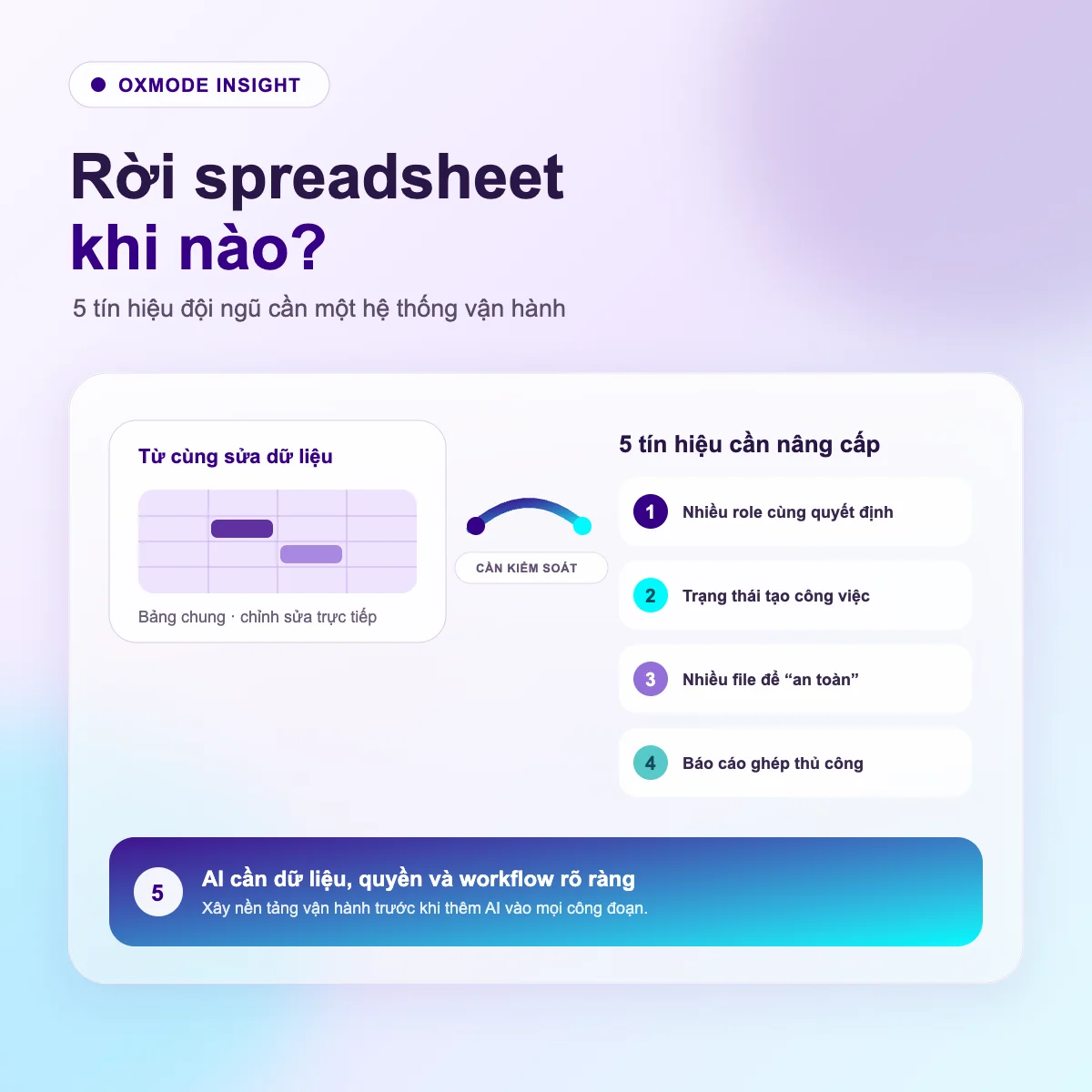
Five signs your team needs an operating system
1. Multiple roles own one decision
When sales updates an opportunity, a manager approves a discount, finance issues a document, and leadership needs a summary, people should not all have the same ability to edit every field. The operating model needs explicit roles, data scopes, and actions.
2. Status changes trigger real work
“Approved” is not merely a label. It may require complete documentation, an approval threshold, a named approver, and a next action. If people repeatedly ask in chat whether an item is approved, the workflow has not been made operational yet.
3. Copies exist to protect people from accidental edits
Files called “final,” “final-2,” or department-specific versions are often a signal that collaboration has exceeded the safe boundaries of one shared table. The aim is not one larger spreadsheet. The aim is one governed source of truth with the right experience for each role.
4. Management reporting is assembled by hand
If someone combines data from several files before a decision can be made, the business is paying in delay and avoidable coordination. Start with one decision that matters: who needs what information, when, and from which source?
5. AI is being discussed without data and action boundaries
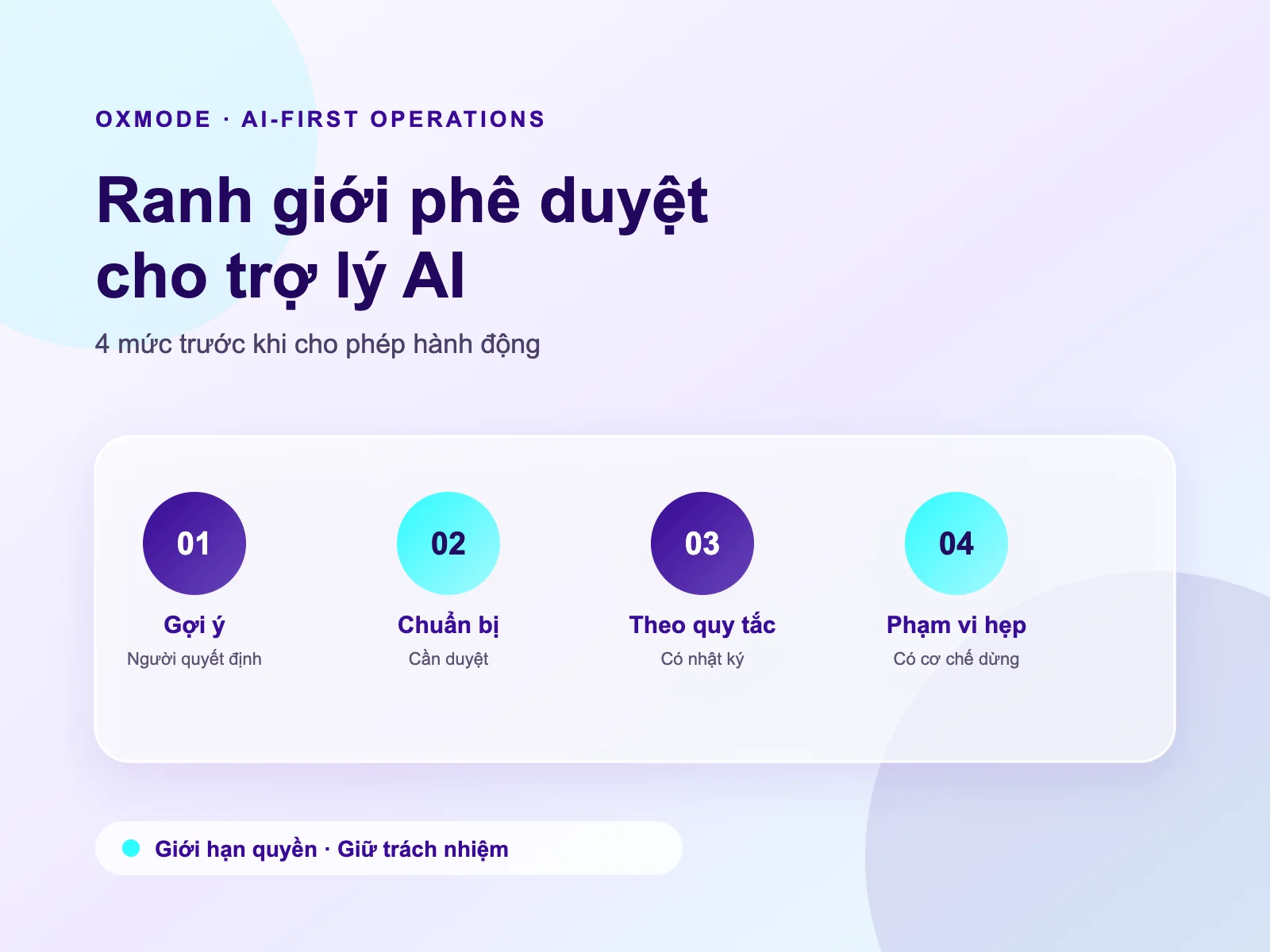
AI is useful in operations only when the system defines what it may see, what it may recommend or execute, and who remains accountable. Data, permissions, and workflow controls should come before adding an assistant to every step.
The OXMODE decision framework: data, process, role
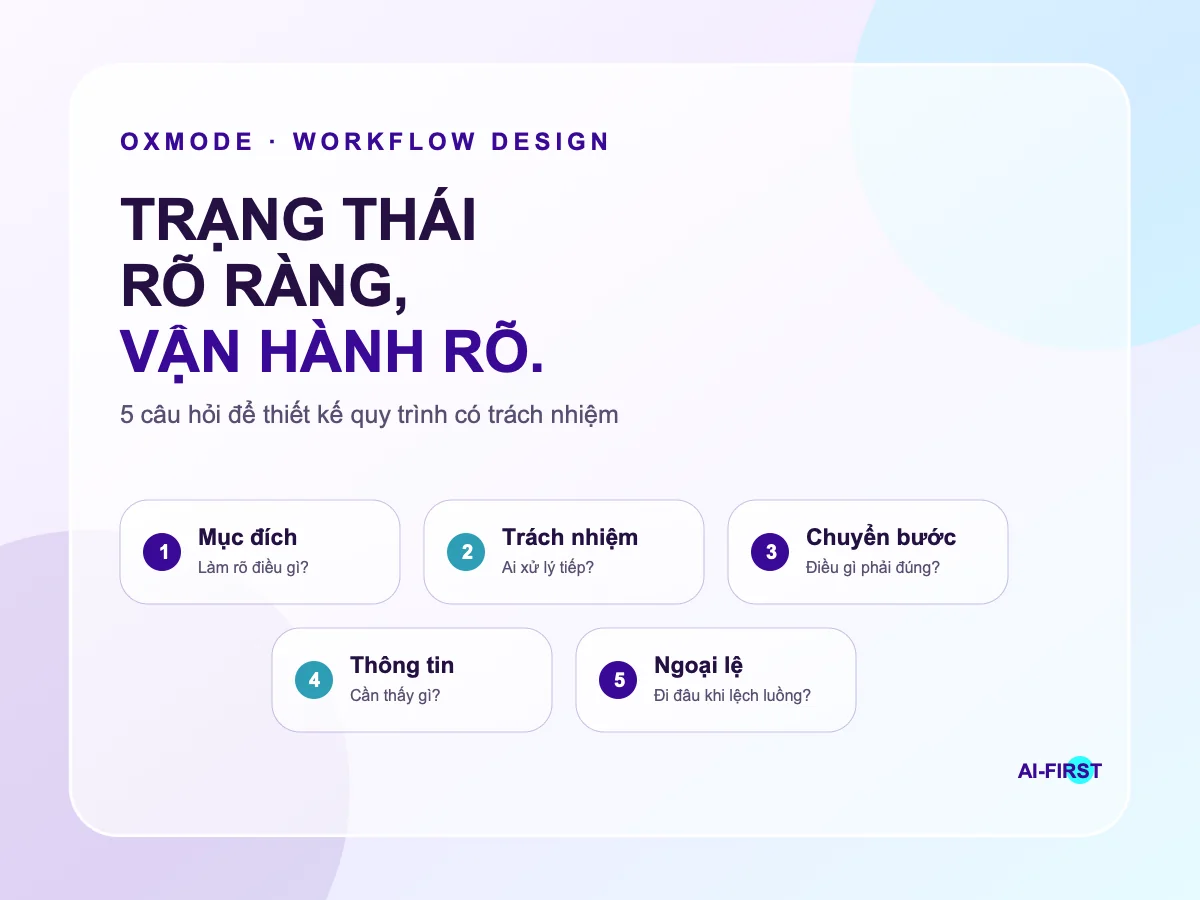
Before comparing platforms, clarify three layers:
- Data: Which business objects need a shared source of truth—customers, contracts, orders, assets, requests, or tasks?
- Process: Which changes carry risk or require approval? Which statuses should trigger the next step?
- Role: Who views, edits, approves, or only monitors? Can the work continue when one person is unavailable?
If the answer is still a small team maintaining a straightforward list, a well-designed spreadsheet may be the most practical choice. If the answer includes multiple roles, cross-functional handoffs, scoped permissions, and audit needs, evaluate tools as operating-system foundations rather than template libraries.
Move safely: pilot one painful workflow
Avoid replacing everything at once. Pick one process that is frequent, error-prone or slow, and has a clear owner. Then map its inputs, states, decisions, roles, and success metric. Run a narrow pilot alongside the old method before expanding.
This approach lets a team prove an operational improvement instead of launching a large software project that users do not adopt.