In 2026, the term "AI Agent" dominates all media. Vendors aggressively advertise that you only need to give an AI a goal, and it will autonomously run your entire company. Is the reality that simple?
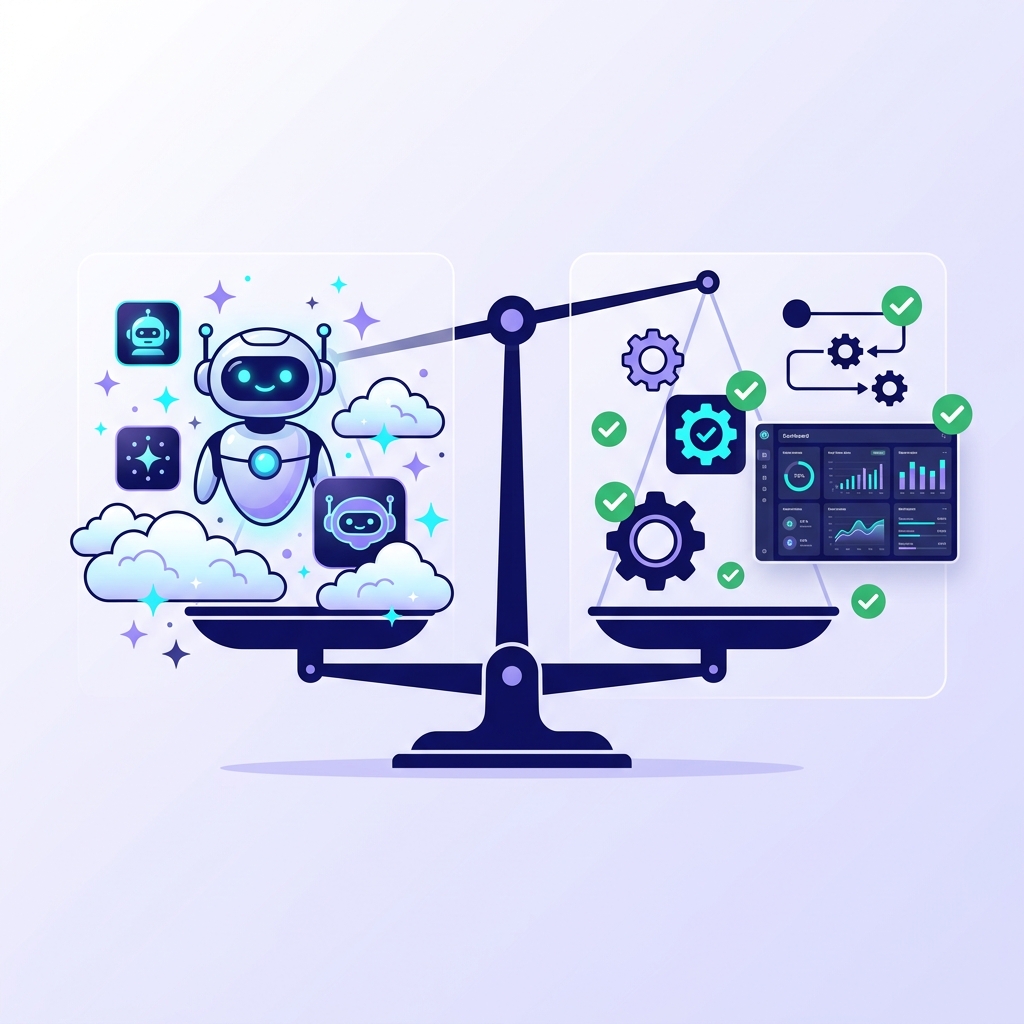
How does an AI Workflow differ from an AI Agent?
Most enterprise solutions currently in use are actually AI Workflows (Using static LLMs). Example: Receive an email -> Summarize content -> Sentiment analysis -> Save to CRM. This is a linear, predictable, stable, and safe flow.
An AI Agent, as defined by Dr. Andrew Ng, requires much higher autonomy, typically utilizing 4 design patterns: Reflection (self-correction), Tool Use (using external tools like web browsing or running code), Planning (sequencing steps), and Multi-agent collaboration.
The Risks of AI Agents in SMEs
Autonomy creates the risk of "Hallucination" and loss of control. Imagine an AI Social Media Manager deciding to insult a customer because it determined that to be a "high engagement strategy". The cost of rectifying errors in real business is far more expensive than API call costs.
AI Application Strategy for Businesses
Do not blindly pursue AI Agents if your data foundation is not standardized. OXMODE recommends the "Human in the loop" principle:
- Phase 1: Use AI as a Copilot. AI drafts content, analyzes data, prepares reports. Humans review before execution.
- Phase 2: Internal Automation. AI automatically tags customer support tickets or routes internal emails.
- Phase 3 (Future): Only when LLMs achieve extreme reliability should you grant Agents the authority to execute profit-generating tasks or communicate directly with clients.